Artificial turf is low maintenance, not no maintenance. A few minutes a week keeps it looking great, and the right cleaning routine stops pet odor before it starts, even in Florida summer heat.
Weekly care
Blow or rake off leaves and debris, pick up after pets and give pet areas a quick rinse with the hose. That's it for most weeks.
Getting rid of dog urine smell
Odor comes from urine and bacteria building up in the infill and backing, not the blades. Rinsing helps, but a pet-safe enzyme cleaner is what actually breaks the buildup down. Apply it to the problem area, let it work, then rinse.
If odor keeps coming back, the cause is usually infill that traps smell or backing that drains slowly. Upgrading infill or improving drainage fixes it for good.
Brushing and infill
Once a month, brush high-traffic areas against the grain with a stiff, non-metal broom to lift matted fibers. Check the infill in busy spots and top it off if the backing starts to show.
What to avoid
Metal rakes, sharp tools, harsh chemicals, gum and anything hot, like grills, cigarettes or fire pit embers, on the turf.
When to call a pro
Once or twice a year, a professional power brushing and enzyme deep clean resets the lawn. Multi-dog homes, vacation rentals and commercial dog parks benefit from monthly or quarterly service. Our Fresh Turf Care Membership handles it on a schedule, and we service turf we didn't install too.
Frequently Asked Questions
What is the best way to clean artificial turf?
Remove debris weekly, rinse pet areas, brush high-traffic spots monthly and schedule a professional deep clean once or twice a year.
How do I get rid of dog urine smell on turf?
Use a pet-safe enzyme cleaner, then rinse. Persistent odor usually means the infill or drainage needs to be upgraded.
Can I pressure wash artificial turf?
Use low pressure only. High pressure can loosen infill and damage fibers.
Do you clean turf you didn't install?
Yes. We clean, brush and repair any synthetic turf.
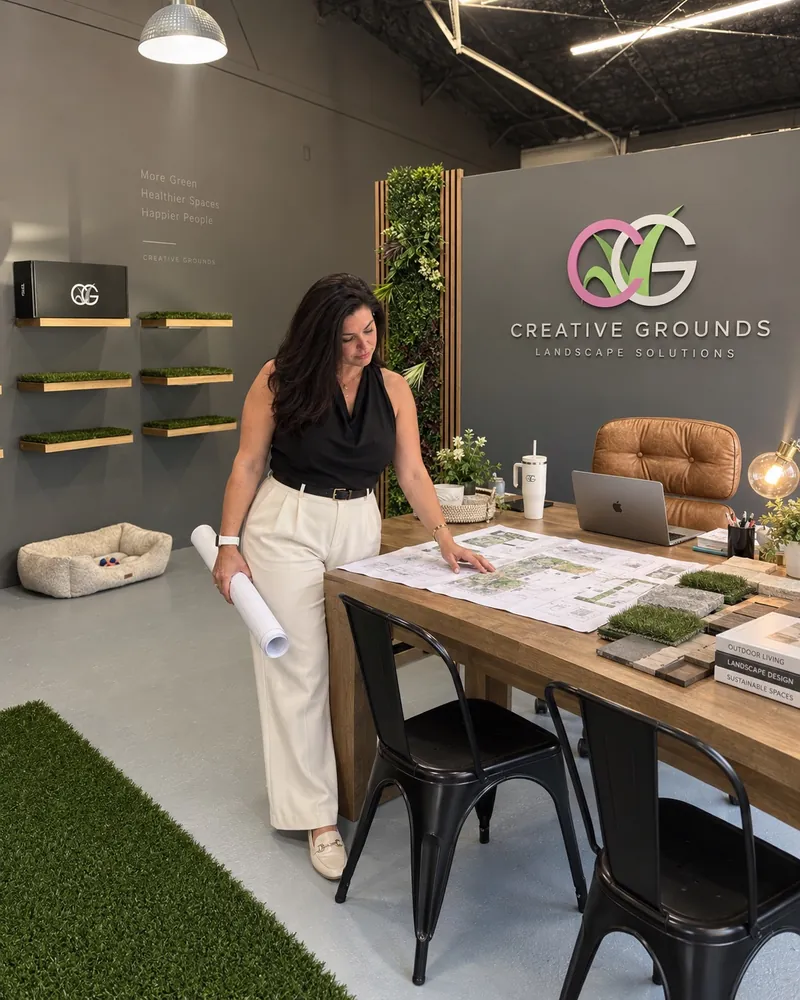
Raysa Machado is the founder of Creative Grounds, a woman-owned outdoor living company in Naples, FL that has installed over 600,000 sq ft of turf across Southwest Florida and Miami.