A backyard putting green is one of the most-used upgrades we install. Golfers practice more, kids and guests love it, and it turns an empty corner of the yard into the favorite spot. Here's how to plan one that actually plays like a real green.
Choosing the size and spot
Most backyard greens are a few hundred square feet, sized to fit the yard and the number of holes you want. Pick a level spot with good drainage, and think about where you'll chip from and how it looks from the lanai.
What makes a green play well
Putting turf. A short, tight fiber designed for ball roll, not a landscape turf.
Contours. Breaks shaped into the base so you practice real reads, not just straight putts.
Sand top-dressing. Brushed and rolled in to set the speed.
Fringe and collar. A longer turf border that frames the green and lets you practice chips.
Cups and flags. Placed for the putts you want to work on.
Adding more to the space
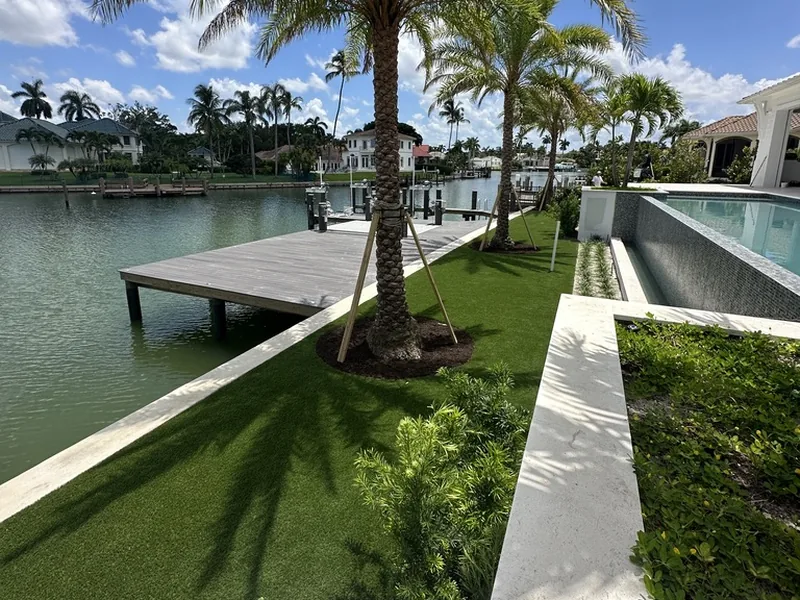
Many clients combine a green with a turf lawn, paver patio, fire pit or landscape lighting for evening practice. Waterfront greens in Englewood and Naples are some of our favorite projects.
What affects the cost
Size, number of cups, how much contouring you want, fringe and chipping areas, site prep and access. We design your green on site and give you a clear, itemized quote.
Frequently Asked Questions
How much space do I need for a putting green?
Even a small area can work. Most backyard greens are sized to the yard and the number of holes you want.
Can a turf putting green have breaks?
Yes. Contours are shaped into the base so the green has real breaks and reads.
How do you maintain a putting green?
Brush it, keep debris off and top-dress occasionally to keep the speed consistent. We offer tune-ups.
Can you install turf for a golf simulator?
Yes. We install simulator room turf and hitting areas. We don't sell the simulators themselves.
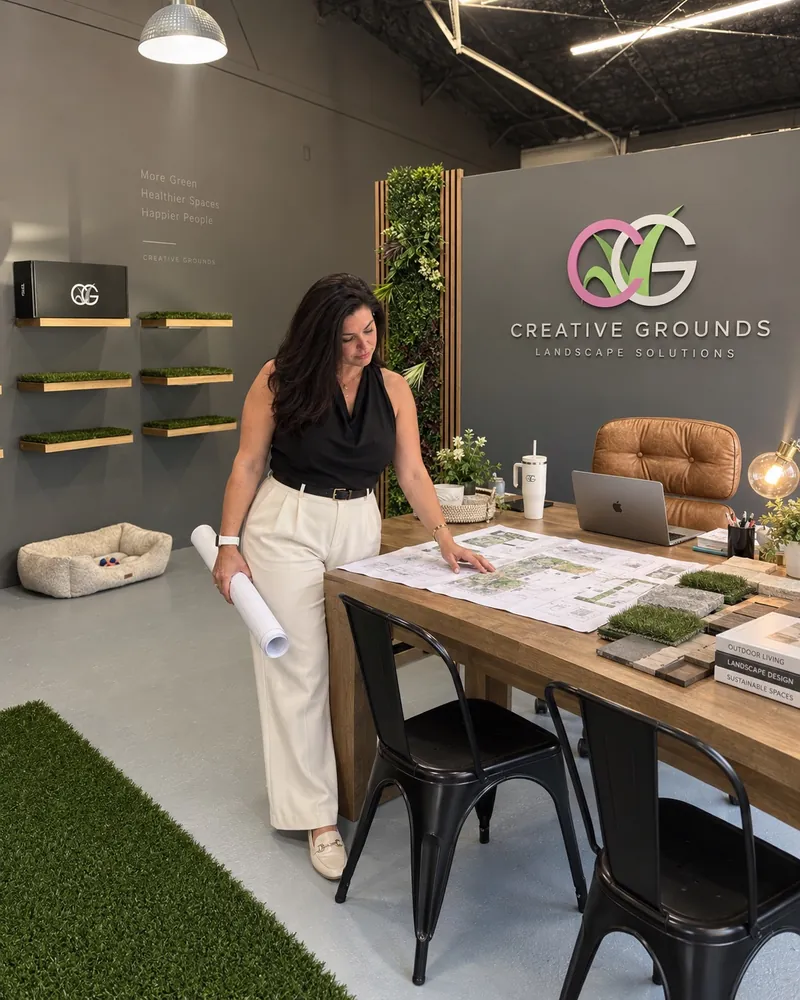
Raysa Machado is the founder of Creative Grounds, a woman-owned outdoor living company in Naples, FL that has installed over 600,000 sq ft of turf across Southwest Florida and Miami.